For more than a decade, progress against advanced melanoma has been written in the language of checkpoint inhibitors, drugs that release the brakes on the immune system and hope it finds the tumour. A phase 3 result reported this week points to a different grammar altogether: a vaccine built for one patient, from that patient's own tumour, that tells the immune system exactly what to hunt.
The therapy pairs Intismeran, a personalised messenger RNA (mRNA) vaccine developed by Moderna and Merck (known as MSD outside North America), with Keytruda, the companies' established immunotherapy. Given to people with high-risk melanoma after surgery, the combination kept patients cancer free for longer and lowered the chance of the disease spreading, compared with Keytruda alone. The full data set is not yet published or peer reviewed, and the durability of the benefit is still unclear. Even so, oncologists are describing it, in the words of Oxford's Dr Lennard Lee, as "proof of principle that personalised cancer vaccines work".
A vaccine that is manufactured, not stocked
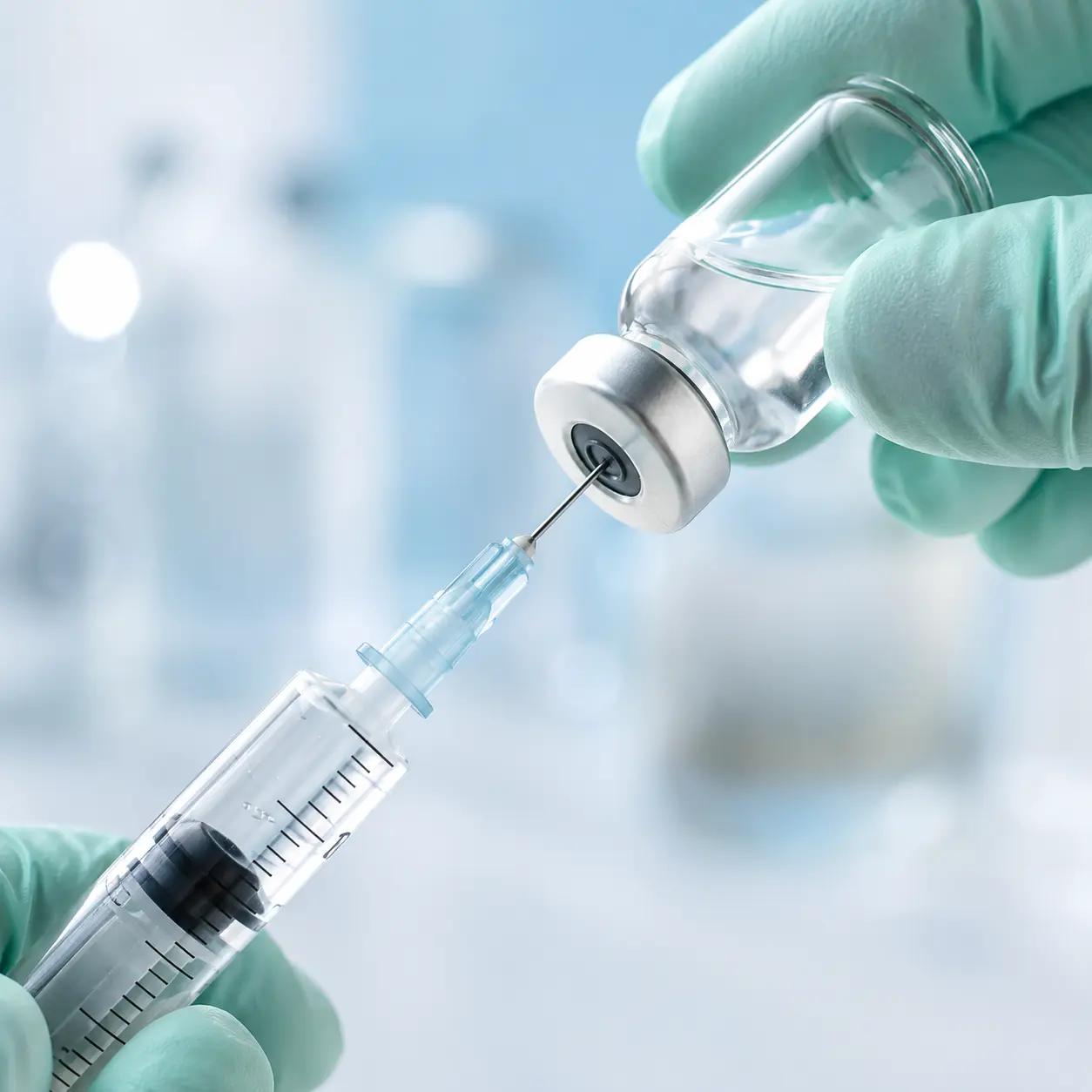
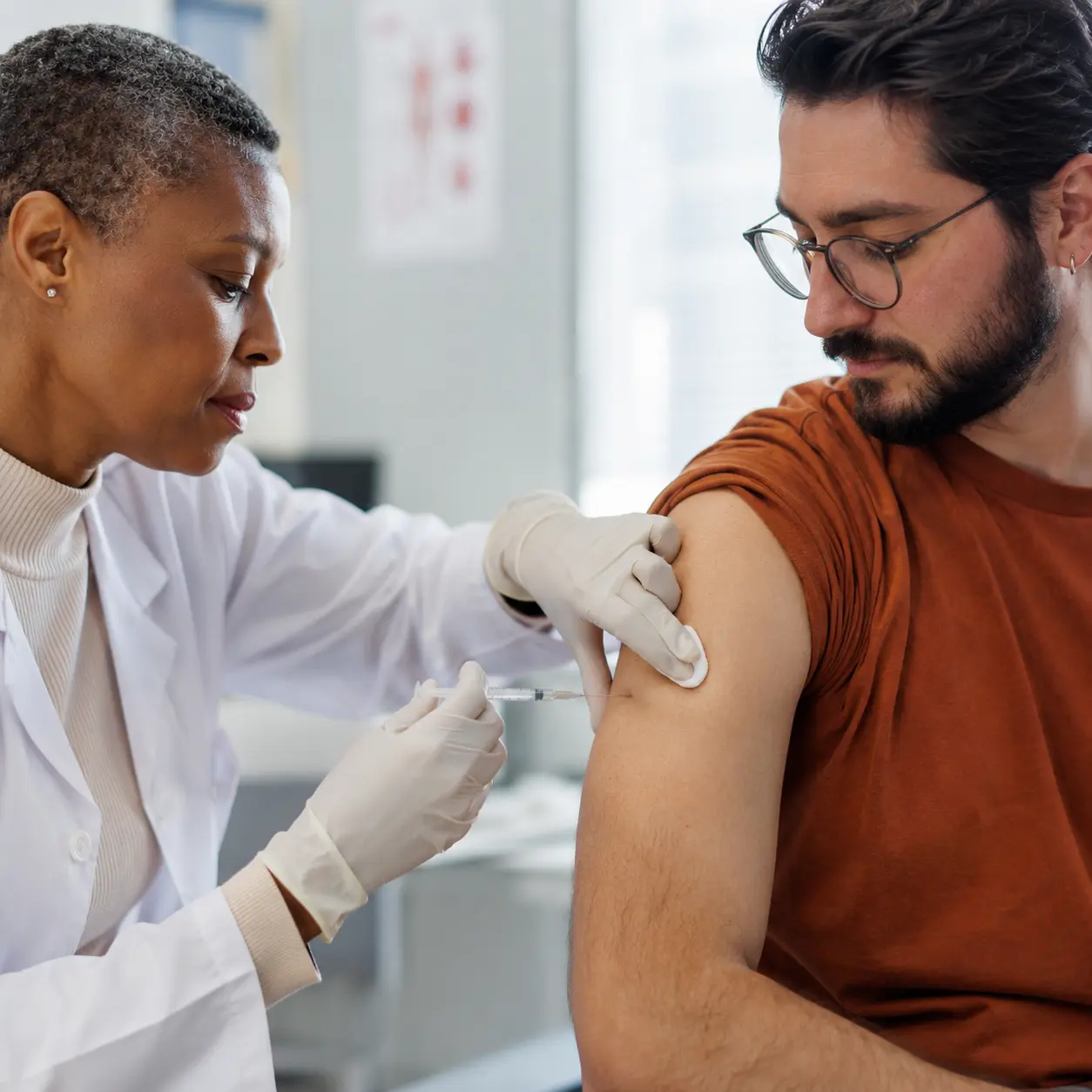
Most vaccines are made once and given to millions. A personalised cancer vaccine inverts that model. Surgeons remove a fragment of the patient's tumour, its DNA is sequenced, and software compares it with the patient's healthy cells to identify neoantigens, the mutated flags that appear only on cancer cells. A bespoke mRNA vaccine is then produced to carry the code for a selection of those flags. Once injected, it trains the immune system to recognise and attack any cancer cells that survived surgery.
That is a fundamentally different idea from a preventive jab, and from the checkpoint inhibitors that have dominated melanoma care. Rather than lifting a general restraint on the immune system, the vaccine hands it a precise set of targets drawn from the individual tumour. It is the difference between telling the immune system to be more aggressive and telling it exactly where to look.
What the melanoma trial showed, and what it did not
The study was a phase 3 trial of more than 1,000 patients with high-risk stage 2, 3 or 4 melanoma, ranging from large localised tumours to disease that had already spread. All had undergone surgery, placing the trial in the adjuvant setting, the window after an operation when the aim is to stop microscopic residual disease from seeding a recurrence.
According to the companies, adding the vaccine to Keytruda significantly extended the time patients stayed cancer free and reduced the risk of the disease spreading to other organs. Those are meaningful endpoints in melanoma, where recurrence after surgery is common and often difficult to treat. The caveats are equally clear. The results are interim, the detailed figures are due at a medical conference in October, and independent peer review has not yet taken place. Regulators would then need to authorise the therapy, and health systems would need to fund it, before any patient outside a trial could receive it.
The strategic shift: intercepting cancer, not chasing it
The choice of the adjuvant setting is not incidental. Treating minimal residual disease, the handful of cells that scans cannot see, is where a personalised vaccine should be at its strongest, because the immune system is being asked to clear a small, defined threat rather than a large established tumour. If the approach holds up, it reframes the goal of early oncology from treating visible cancer to intercepting invisible cancer before it returns. Moderna and Merck are already testing the same platform in lung, bladder and kidney cancers, which suggests the melanoma result is being treated as a template rather than a one-off.
The bottleneck moves from the laboratory to the factory
Here is the part of the story that matters most to the industry, and that rarely reaches the headlines. If personalised cancer vaccines work, the hard problem is no longer only scientific. It is operational. Every dose is a batch of one, made against the clock while the patient recovers from surgery. Manufacturing has to sequence a tumour, design a vaccine, synthesise it, run quality control and release it within weeks, then repeat that for the next patient, and the next, at national scale.
That demands a manufacturing and logistics model the sector has barely built: near-patient or decentralised production, tightly integrated with surgical and pathology services, and wrapped in the cold chain that mRNA requires. The economics, the turnaround time and the reliability of that pipeline, rather than the biology alone, may decide how quickly these therapies reach ordinary clinics.
A framework built for millions meets a medicine made for one
Personalised vaccines also test a regulatory system designed around identical, mass-produced products. When every dose is unique, the traditional questions of batch consistency, comparability and post-market surveillance have to be answered at the level of the process rather than the finished product. Regulators including the UK's MHRA have begun modernising how they assess advanced and individualised therapies, as part of a wider reform of how novel medicines are evaluated. How quickly those frameworks adapt to one-patient manufacturing will shape the timeline as much as any trial readout.
What it means for the NHS and for patients
NHS England has signalled that it is preparing to bring personalised cancer treatments of this kind to patients, and the UK has positioned itself as an early adopter of cancer vaccine trials. For patients, the promise is concrete: a therapy aimed at the specific mutations driving their own disease, offered in the setting where it can do the most good. The honest message is one of measured optimism. This is an important advance and a genuine proof of principle, but the decisive data, the regulatory decisions and the manufacturing scale-up are all still ahead.
An inflection point, not an endpoint
The melanoma result is best read not as the arrival of a finished product but as the moment a whole category moved from theory to evidence. Personalised cancer vaccines have spent years as a compelling hypothesis. A large phase 3 trial now suggests the hypothesis is right. The next chapter will be written less in the language of immunology and more in the language of manufacturing, regulation and health economics, which is precisely where the pharmaceutical industry will earn or lose the promise of this technology.
Written by Tom Okafor, clinical trials and oncology correspondent, and medically reviewed for scientific and regulatory accuracy by Dr. Eleanor Vance, specialist in regulatory affairs and market authorisation, on 20 August 2026. This article is industry analysis and does not constitute medical advice.