Microgravity is increasingly recognised as a valuable tool for antimicrobial discovery due to its impact on microbial interactions, competition, and adaptation. Evidence from the International Space Station demonstrates that bacteriophages can coevolve with bacteria under microgravity constraints, and that long-lasting antimicrobial surfaces can be rigorously tested in closed, high-contact environments. For researchers and professionals, this represents a complementary platform that may reveal microbial vulnerabilities and countermeasures, particularly when terrestrial discovery yields few genuinely novel options.
The intention is not to suggest that space-based research replaces terrestrial laboratory science. Rather, the unique physical conditions of low Earth orbit impose selection pressures that are challenging to replicate with standard laboratory equipment, and these pressures can be harnessed to develop testable antimicrobial strategies. Given forecasts of significant mortality due to antimicrobial resistance and the limited innovation within the antibacterial pipeline, an additional credible route to discovery is increasingly essential.
What makes antimicrobial resistance a discovery emergency
The most important point is scale. Forecasts from the Global Research on Antimicrobial Resistance project estimate 39 million deaths directly attributable to bacterial AMR between 2025 and 2050 if current trajectories persist, and the modelling also projects that annual attributable deaths could reach 1.91 million in 2050. Those figures sit alongside a much larger number of deaths associated with AMR, reflecting infections where resistance contributes to a fatal outcome even if it is not the sole driver.
The second consideration is novelty. Although the WHO antibacterial pipeline has increased in number, it still contains too few agents that meet robust innovation criteria for serious infections. WHO reported that the number of antibacterial agents in the clinical pipeline rose from 80 in 2021 to 97 in 2023. However, among antibiotics targeting priority bacterial pathogens, only a minority are considered innovative by WHO standards. This highlights a central challenge in modern antimicrobial resistance control: while chemical development efforts are substantial, there remains a shortage of genuinely novel approaches to combat pathogens that have adapted to existing drug classes.
The third consideration is biological complexity. Gram-negative pathogens, in particular, employ multiple defense mechanisms, including reduced permeability, efflux activity, and biofilm formation. This represents a systems-level challenge rather than a single-mechanism issue. Discovery strategies that yield only incremental chemical modifications must contend with microbial adaptability that is rapid, widespread, and frequently transferable via mobile genetic elements.
Why microgravity changes microbial selection pressures
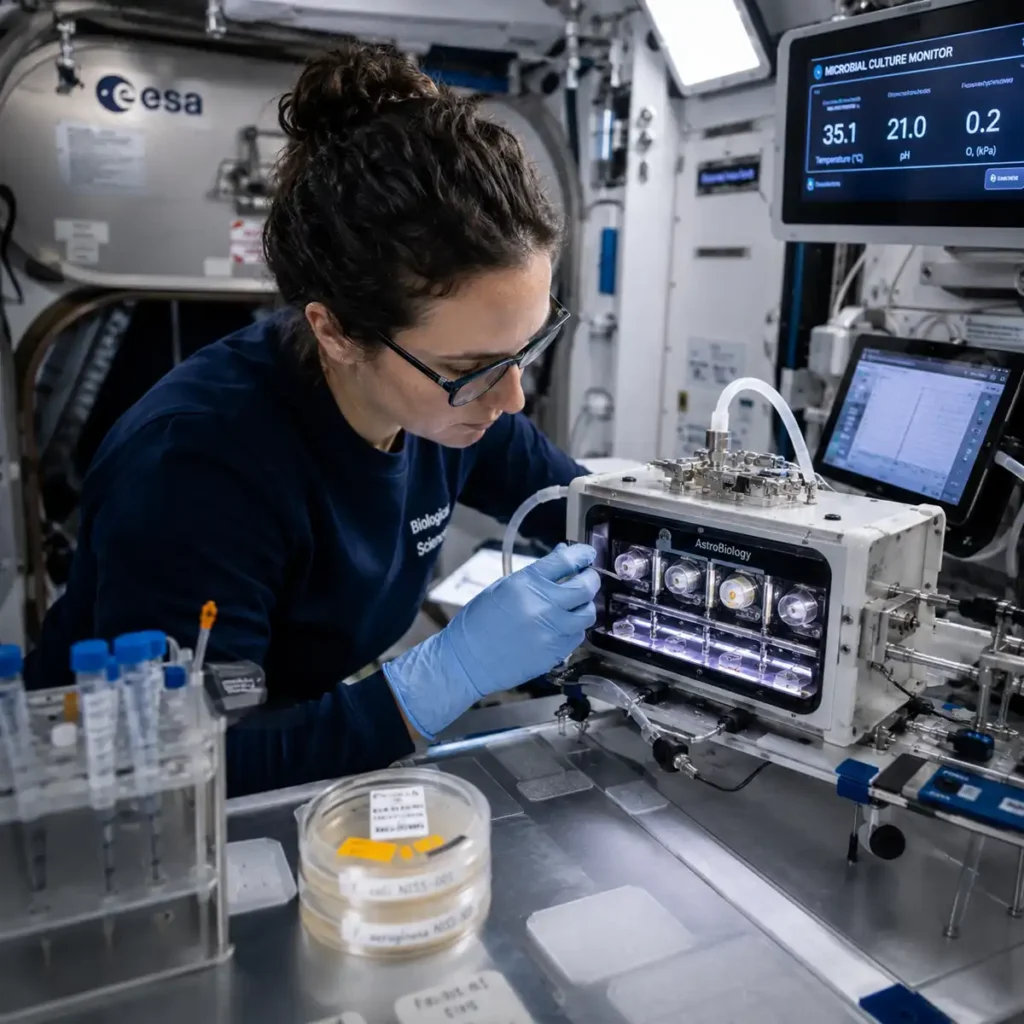
The value of microgravity is rooted in its physical effects. In low Earth orbit, the absence of gravity-driven convection and sedimentation alters fluid behaviour, which can shift nutrient gradients, modify cellular exposure to shear forces, and change the dynamics of particle collisions. For microbes and viruses that rely on encounter rates, these changes serve as a form of selection pressure.
In terrestrial liquid culture, shaking and convection generate mixing that increases encounters between bacteriophages and bacteria. In microgravity, reduced convection can lead to more quiescent conditions, where diffusion dominates transport. In that setting, a phage that succeeds may do so because it binds faster, binds more tightly, or executes subsequent infection steps more efficiently when opportunities are rarer.
Microgravity-related conditions also affect bacterial physiology. Spaceflight and low-shear environments have been associated with changes in gene expression and stress responses across multiple bacterial species, including shifts linked to virulence-relevant pathways. These effects do not always move in the same direction across organisms, but the repeated observation that mechanical forces can act as regulatory signals is highly relevant to infection biology.
For antimicrobial discovery, the implications are direct. When the environment alters both the predator and the prey, the resulting evolutionary outcomes may differ from those observed in standard terrestrial culture. Although a different evolutionary pathway is not inherently beneficial, it can reveal mechanisms and phenotypes that warrant systematic investigation.
What the ISS phage coevolution experiment found
The key result from the recent ISS bacteriophage work is that microgravity reshaped bacteriophage-host coevolution in a measurable way. In a controlled experiment using bacteriophage T7 and a laboratory strain of Escherichia coli, phage activity was initially delayed under microgravity but ultimately succeeded. Over a longer incubation period, both the phage and bacterial populations accumulated mutations linked to improved fitness in the microgravity environment.
The structure of the work matters for interpretation. A twin design compared microgravity samples incubated on the ISS with matched ground controls under aligned temperature profiles. Short timepoints captured immediate dynamics, while a long incubation extending to 23 days allowed selection to act. That combination makes it harder to dismiss observed differences as mere transient physiology.
A second important detail is methodological depth. The investigators used deep mutational scanning approaches to map functional consequences within a defined region of a receptor-binding protein, including a library of 1,660 single-amino-acid variants in the tip domain, which has been studied under terrestrial conditions. This matters because it converts an interesting observation into a map of what changes in microgravity are favoured or disfavoured, at least within that protein region and in that host context.
A third detail is where the mutations are concentrated. In the phage genome, microgravity-associated substitution patterns did not distribute evenly. Enrichment signals were observed in specific genes, including gp7.3. That is noteworthy because it draws attention to parts of phage biology that are less familiar than simple receptor-binding narratives, and it provides hypotheses for future mechanistic work on infection steps beyond adsorption.
These findings do not, in themselves, establish clinical utility. Instead, they demonstrate a foundational principle: microgravity research can generate distinct evolutionary outcomes in a well-characterised phage-host system, thereby providing a basis for translating this approach into clinically relevant selection and screening pipelines.
How microgravity can inform bacteriophage therapy development
A key translational question concerns how space-selected phage variants could contribute to bacteriophage therapy or phage-derived discovery. The objective is not to administer ISS-evolved phages directly to patients, but rather to utilise microgravity to enrich for functional traits that are difficult to select for on Earth. These traits can then be engineered, screened, and regulated within established translational frameworks.
For clinical use, therapeutic phages must satisfy several constraints simultaneously. They must target the right bacterial strains, replicate effectively at the infection site, avoid carrying harmful genes, and be manufacturable to high-quality standards. Microgravity selection does not remove those requirements. What it may do is supply a richer starting set of candidates with altered binding properties, altered infection kinetics, or altered stability under stress.
A practical framework involves a two-stage system.
First stage in orbit, selection under constrained encounter conditions and altered host physiology. This stage is not about therapeutic release. It is about generating diversity filtered by a physical environment. Second stage on Earth, systematic screening against panels of clinical isolates, followed by safety characterisation, manufacturing development, and regulatory-aligned testing.
This framing is particularly relevant to infections where bacterial surface variation can limit phage adsorption. In urinary tract infections, for example, uropathogenic E coli strains can vary in lipopolysaccharide structure and surface masking. In respiratory infections, Pseudomonas aeruginosa can adopt biofilm-associated phenotypes that reduce vulnerability to both drugs and phages. A selection environment that forces phages to be efficient at first contact could, in theory, increase the probability of finding variants that work across a wider set of clinical surfaces, though that remains an empirical question.
The immediate scientific value lies not in a claim of cure, but in a methodological advance. Microgravity can serve as a physical selection system that complements directed evolution in conventional bioreactors.
What space biofilms teach about persistence and tolerance
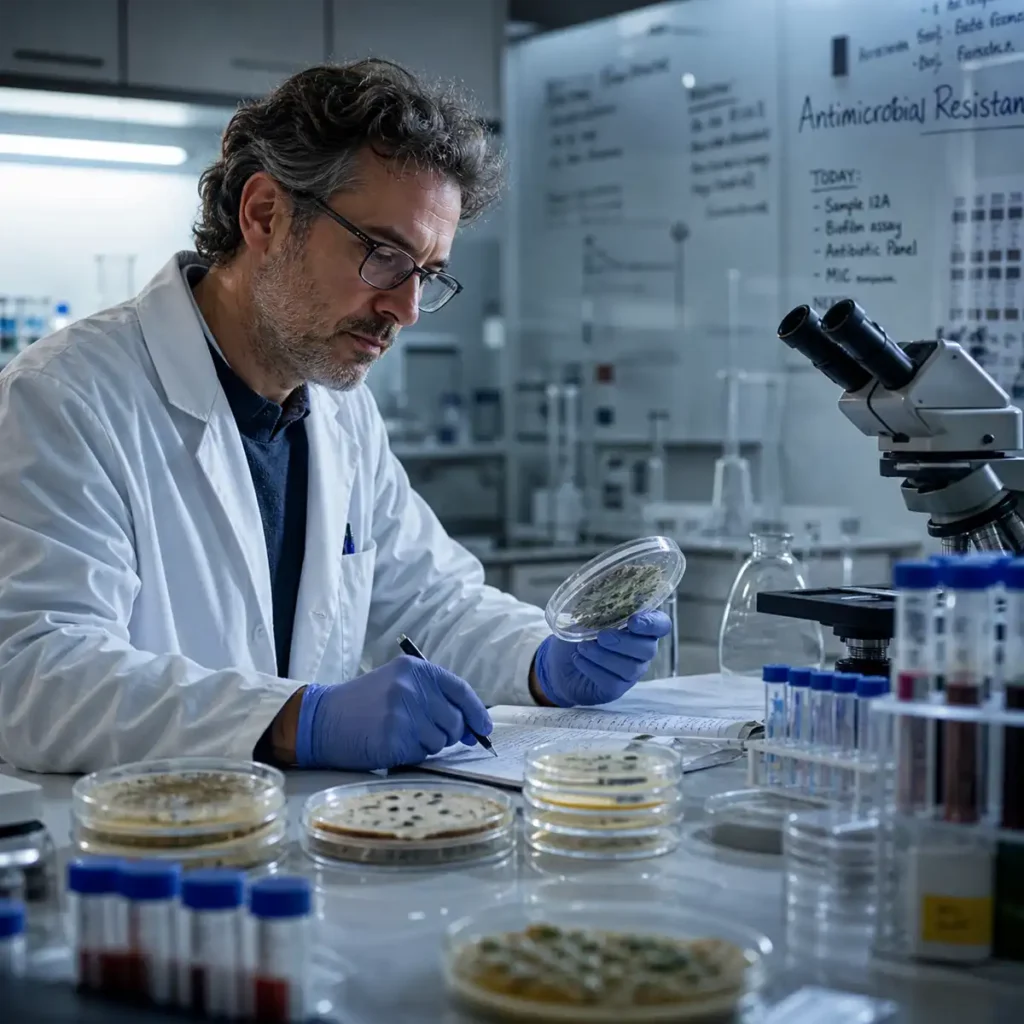
Biofilms are where many antimicrobial strategies fail quietly. They increase tolerance through gradients of oxygen and nutrients, slower growth, altered gene expression, and physical and chemical shielding. Biofilm biology also matters because it sits at the intersection of infection treatment and infection prevention, including in catheter-associated infections, chronic lung infection, and device colonisation.
Spaceflight biofilm evidence is important because it shows that microgravity can alter biofilm morphology and biomass. In a spaceflight study of Pseudomonas aeruginosa, researchers reported increased viable cell numbers, increased biomass, and increased thickness compared with normal gravity controls. The work also described a distinctive column-and-canopy architecture that was not observed in the terrestrial comparators.
From a discovery perspective, this is significant in two primary ways.
First, it suggests that antimicrobial testing in microgravity may expose performance gaps that are not obvious in standard assays. A compound or surface that performs well against planktonic cells in terrestrial culture can perform poorly in biofilm-dominant conditions, especially when biofilm structure is altered.
Second, it suggests that microgravity provides a high-pressure proving ground for anti-biofilm strategies, including coatings, materials, microtopography, and combined approaches that reduce attachment or weaken matrix formation.
This does not suggest that space biofilms are identical to clinical biofilms. Rather, it indicates that they may present more demanding conditions in specific respects, which can be advantageous when the objective is to identify interventions that remain effective as microbes adopt protective community states.
How AGXX coatings performed in long-duration ISS testing
Alongside biological antimicrobials, microgravity platforms can validate non-drug infection prevention tools. One of the clearest cases is AGXX antimicrobial coating technology tested on the ISS as a surface intervention in a high-contact location.
In the published work and reporting on the AGXX ISS exposure, metal sheets were placed on a contamination-prone site, including the bathroom door. Compared with standard stainless steel and a conventional silver coating, AGXX-coated surfaces showed markedly lower recoverable bacteria over extended exposure. Reports describe 0 recoverable bacteria after 6 months on AGXX and only 12 isolates recovered after 12 and 19 months, representing an 80% reduction compared with bare steel. In the same comparative context, conventional silver was reported to show only a modest reduction relative to steel.
These results are significant because durability and sustained efficacy are often the primary limitations of antimicrobial surfaces. Many coatings demonstrate initial promise but lose effectiveness due to wear, surface fouling, or depletion of active agents. A coating that maintains measurable suppression over 19 months in a closed, high-contact environment warrants systematic follow-up in terrestrial settings where environmental contamination contributes to transmission risk.
Real fact: An ISS surface trial reported 0 recoverable bacteria on AGXX after 6 months, and 12 isolates recovered after 12 and 19 months, representing an 80% reduction versus bare steel.
Mechanistically, AGXX is described as a bimetallic system involving silver and ruthenium, which facilitates redox cycling and the generation of reactive oxygen species at the surface. The critical translational consideration is the operational property: a surface that remains persistently hostile to microbial survival could reduce microbial load on high-touch sites, thereby lowering opportunities for transmission, particularly in environments where cleaning compliance and contact frequency are limiting factors.
For clinical practice, the most realistic pathway is targeted deployment rather than blanket replacement. High-touch handles, bed rails, toilet door plates, and device external surfaces are potential candidates, but only if performance is reproducible under the cleaning agents, abrasion patterns, and regulatory constraints of healthcare environments.
Where orbital biomanufacturing fits in the antimicrobial pipeline
The phrase “orbital biomanufacturing” can be overused, but in the context of antimicrobials, it points to a specific opportunity. Space conditions can support selection, production, or structural outcomes that differ from Earth. The ISS phage work supports selection as a credible use case. The AGXX work supports long-duration validation of materials. Together, they suggest a pipeline concept with clear role separations.
Discovery and enrichment in orbit. Screening, toxicology, and manufacturing development on Earth. Clinical trials and regulatory approval on Earth.
This separation is important because it maintains a focus on practical workflow rather than speculative outcomes. It also clarifies the necessary advancements for the model to become routine. Standardised flight hardware, robust sample containment, reproducible activation and incubation protocols, and high-fidelity chain of custody for returned materials are essential, as are data standards that enable comparisons across missions and organisms.
Economically, the model will only be justified for targets where the value of a successful candidate is high and terrestrial methods have repeatedly failed. Multi-drug resistant Gram-negative infections and biofilm-associated device infections fit that profile because they remain difficult to treat and expensive to manage.
Scientifically, this approach fosters a new type of collaboration. Spaceflight teams provide the environment and hardware, clinical microbiology teams contribute isolate libraries and clinically meaningful endpoints, and manufacturing and regulatory teams ensure that the transition from promising variant to deployable product is not hindered by preventable quality gaps.
What risks and limits come with space-accelerated evolution
Microgravity can promote microbial adaptation, which presents both opportunities and risks. The same selection pressures that favour more efficient bacterial predators could also enhance microbial persistence traits in bacteria, such as increased stress tolerance and biofilm formation. Surveillance efforts have already utilised the ISS as an environment for monitoring antimicrobial resistance as part of crew health planning.
There is also a dual-use dimension. Any platform that accelerates biological optimisation must be governed carefully, even when the target is bacterial rather than human. That governance needs to cover payload selection, containment assurance, and transparent reporting norms that balance scientific benefit with unnecessary risk.
There are scientific limits, too.
Microgravity is not a single variable. Spaceflight includes radiation exposure, vibration, altered atmospheric conditions, and operational constraints that differ across missions. Even when the temperature is controlled, other conditions can vary. Separating microgravity effects from other variables often requires both spaceflight data and carefully designed ground analogues, with clear acknowledgement of what cannot be fully replicated.
Finally, biological translation remains challenging. A phage variant that appears promising in culture may fail in vivo due to factors unrelated to adsorption, such as immune clearance, limited access to the infection site, and bacterial spatial heterogeneity. The primary value of microgravity selection lies in upstream enrichment rather than a guarantee of downstream efficacy.
What research priorities could make the platform clinically useful?
The most useful next steps are concrete and testable.
Expand beyond single model systems. T7 and laboratory E coli are valuable, but clinical relevance requires broader panels, including pathogens prioritised by WHO and pathogens prominent in hospital outbreaks.
Measure outcomes that map to clinical use. Host range breadth across clinical isolate collections, performance in biofilm-dominant assays, and stability under storage and delivery-relevant conditions should be treated as primary endpoints, not secondary curiosities.
Integrate phage and surface strategies. Therapeutics and prevention are not competing categories. A hospital outbreak is controlled by reducing transmission and treating infections. A spacecraft mission is protected by surface hygiene and by contingency treatment when prevention fails. Research designs that reflect a combined reality will be more informative than siloed tests.
Build manufacturing and regulatory thinking into early stages. For phages, this includes genome characterisation, avoidance of lysogeny and harmful cargo, and production quality. For coatings, it includes wear testing, compatibility with cleaning agents, and toxicological assessment of any leachables.
Conclusion
Microgravity alone does not resolve antimicrobial resistance. Instead, it provides a distinct physical context for filtering microbial behaviour and stress-testing antimicrobial interventions. The most robust claim is methodological: ISS evidence demonstrates that bacteriophages and bacterial hosts can coevolve differently in microgravity, and that antimicrobial surfaces can be evaluated over extended periods in closed, high-contact systems.
For researchers and professionals addressing drug-resistant infections, microgravity should be regarded as a catalyst for candidate generation and validation, with terrestrial clinical science determining which approaches merit further investment. The coming decade will likely reveal whether this becomes a niche research avenue or an established pipeline stage. Regardless, the direction is evident: when terrestrial pipelines struggle to yield novel solutions, altering the physical context can expand the search space, analogous to shifting from a ground-level view to an elevated perspective that reveals previously hidden patterns.